
Food Miles
A big ass banner
Background
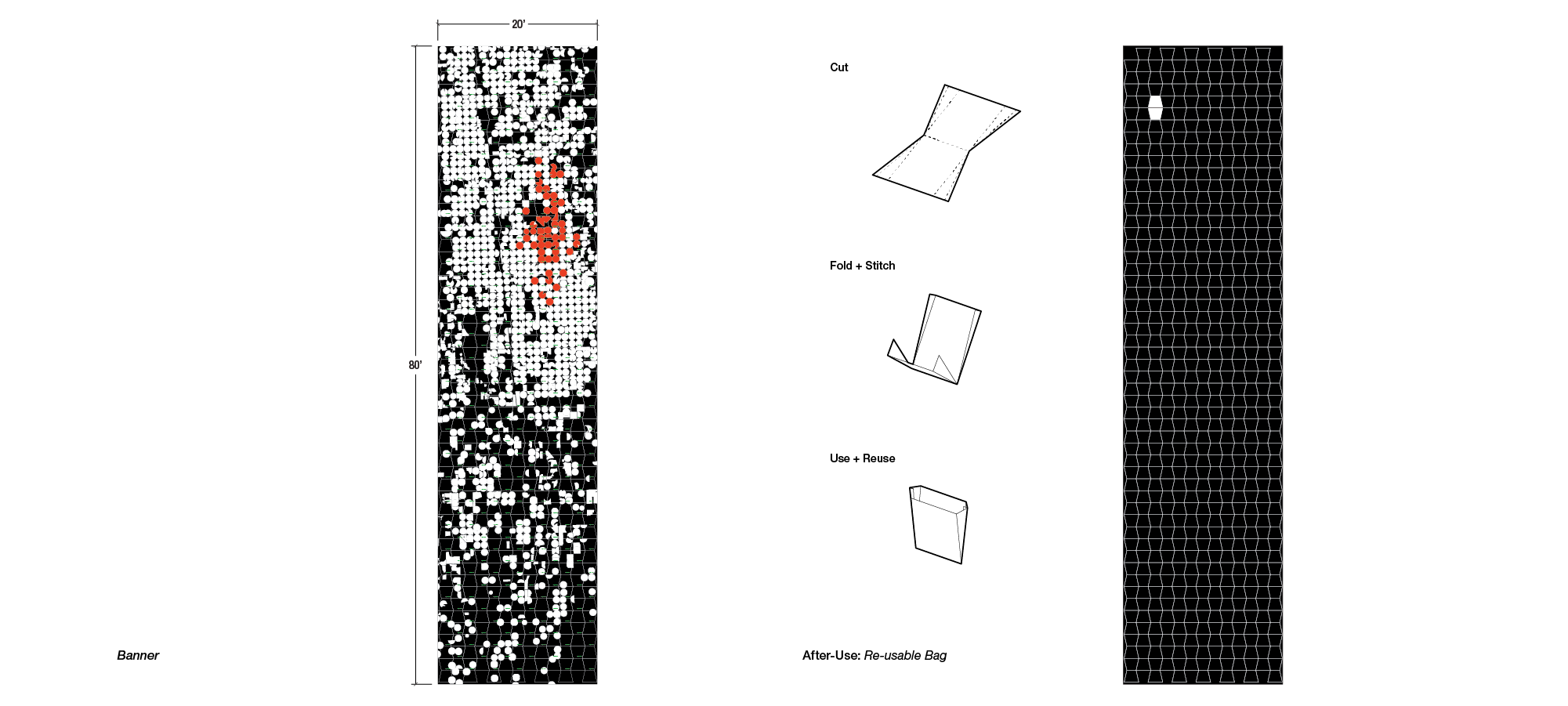
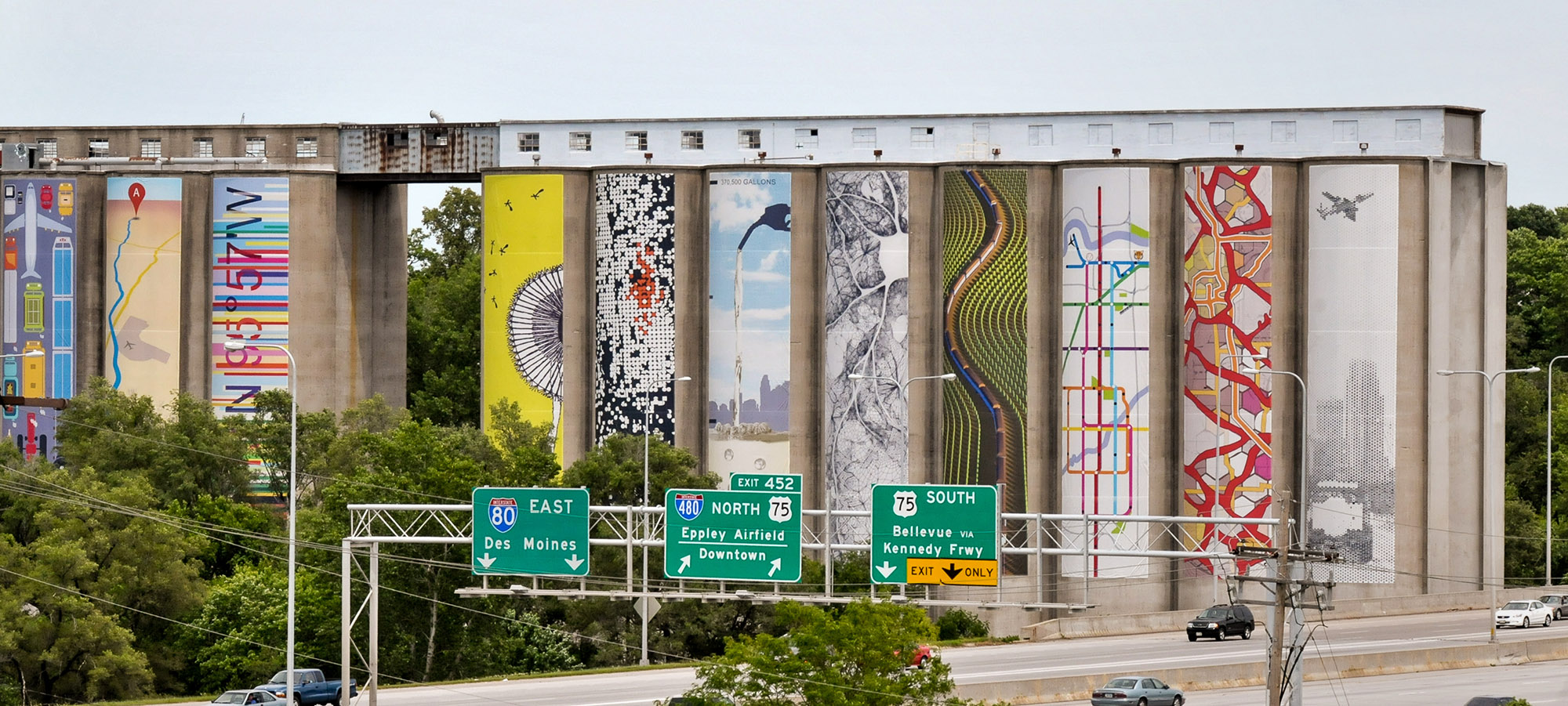
Our submission for the Emerging Terrain’s “Stored Potential 2: Transport(ation)" directs its attention to food miles. Given the banner’s context and the proactive focus on transportation, it raises a question about local usage. What is Omaha, Nebraska’s role in global, domestic and local transportation of goods? Being a central and remote point of the United States, the role applies to each consumer whether accepted or not.
Goods that are part of a local movement are only transported 56 food miles before they reach their consumer while goods that are not, travel 1,494 food miles (96 percent farther than the former, 4 percent of the latter).
Goods that are part of a local movement are only transported 56 food miles before they reach their consumer while goods that are not, travel 1,494 food miles (96 percent farther than the former, 4 percent of the latter).
Info
Designed in 2011
Hung in June 2012
Each banner is 20 feet wide by 80 feet tall. (That's nearly a seven story building.)
Team:
Erin Brouillette
Justin Brouillette
Nicholas Pajerski
Hung in June 2012
Each banner is 20 feet wide by 80 feet tall. (That's nearly a seven story building.)
Team:
Erin Brouillette
Justin Brouillette
Nicholas Pajerski